
Sector experience

The operational, reporting, and technology challenges that create organisation-level risk look different in each sector. The approach is adapted accordingly.
ERP complexity, shop-floor data integrity, and supply chain visibility are the recurring pressure points for mid-market manufacturers navigating growth or consolidation.
Learn more →Regulatory reporting, system fragmentation, and programme governance under scrutiny make independent transformation leadership particularly valuable in this sector.
Learn more →Billing accuracy, utilisation visibility, and practice management system decisions create operational risk that is often underestimated until the board asks the wrong question.
Learn more →Site performance visibility, labour and margin by location, POS and platform decisions, and franchise rollout risk for multi-site retailers, restaurant groups and hospitality operators.
Learn more →Operational data quality, route and asset efficiency reporting, and the technology decisions required to support growth without breaking existing workflows.
Learn more →Compliance-driven reporting, clinical and operational system integration, and programme delivery under regulatory and patient-safety pressure.
Learn more →Commercial, P&C, and London Market insurance - data quality, regulatory reporting, delegated authority management, and programme governance in a complex and scrutinised environment.
Learn more →Contract performance visibility, CAFM data quality, compliance reporting, and integration between property, finance, and operations systems.
Learn more →Execution leadership for PE-backed portfolio companies - from the first 100 days through exit preparation, filling the gap between investment thesis and operational reality.
Learn more →Housing management system replacement, RSH regulatory pressure, repairs performance and resident data quality for registered providers navigating transformation under governance scrutiny.
Learn more →Operational infrastructure, project cost visibility and ERP decisions for EV, renewables, metering and energy services businesses growing faster than their systems can support.
Learn more →Operating model gaps, finance stack readiness and board MI for B2B SaaS businesses where ARR is growing but the operational infrastructure is not keeping pace.
Learn more →Accountancy practices regularly encounter clients facing operational, system, or programme risk that sits outside the scope of audit and compliance work. Assured Velocity provides a trusted, independent referral path for those situations.
The relationship is straightforward: no vendor alignment, no competing advisory interest, and a fixed-scope entry point, the Business Review, that gives your client a clear picture without committing to a large programme.
"Our clients trust us with their numbers. When the operational picture behind those numbers needed independent scrutiny, Assured Velocity was the right referral."
"Fixed scope, no vendor agenda, board-ready output. It is the kind of engagement we are comfortable putting our name next to."
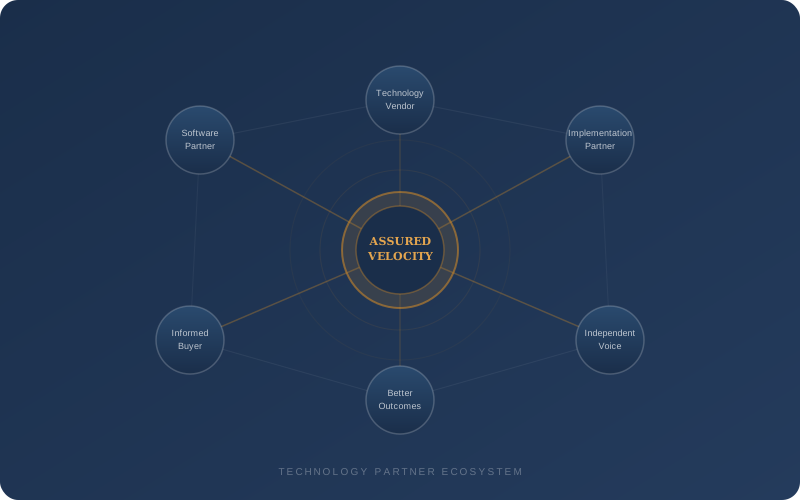
Software vendors and implementation partners benefit from an independent voice that helps clients arrive at technology decisions with clarity rather than anxiety. Assured Velocity does not compete with implementation partners, it creates the conditions for a better-informed buyer.
Where a technology partner wants their prospective clients to have a structured, independent view of fit and readiness before a project begins, Assured Velocity provides that without introducing conflicting commercial interests.
The pressure points in a manufacturing business, shop-floor data, ERP fit, supply chain MI, are structurally different from those in a financial services firm. Generic advice misses this.
In some sectors, reporting failure carries regulatory consequence as well as operational cost. The Health Check and Advisory work accounts for that in how risk is rated and sequenced.
Boards and leadership teams respond differently to an adviser who understands the sector's language, the typical system landscape, and the common failure patterns.
Start with a 30-minute scoping call. The conversation will establish whether Assured Velocity is the right fit and what a useful first step looks like for your business.