Resources

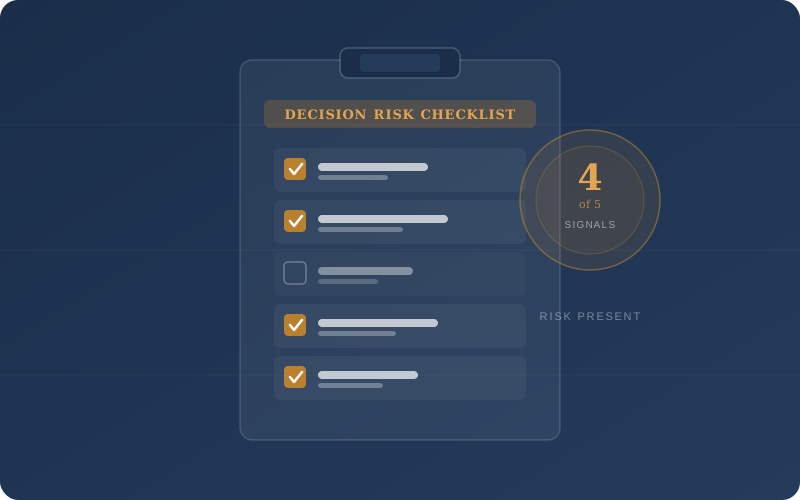
Built for CFOs, CEOs, MDs, and partners who can see confidence slipping before there is agreement on the cause. Work through five diagnostic signs - if three or more apply, independent scrutiny is warranted.

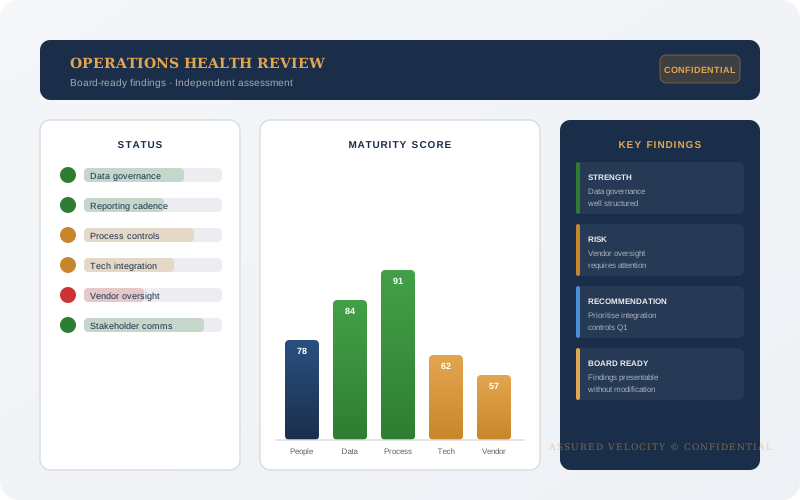
The Assured Velocity standard is that findings should be presentable at board level without modification. A representative example of the one-page board slide produced at the end of a Health Check, with annotations explaining the structure.
Benchmark report drawn from 150+ mid-market diagnostics. Seven performance themes, EBITDA impact ranges, the cost-of-delay matrix, and what separates transformation winners from the rest. Free, CC BY 4.0.
What business transformation means, why most programmes fail, and how to approach it correctly - diagnostics, governance, technology, people change, and programme recovery.
Fractional COO, CTO, and IT Director models explained. What each costs, when to use each, and how to decide between fractional, interim, and permanent. Covers 17 cluster articles.
Data strategy, ERP selection, AI investment, digital transformation, fractional CTO, and technology governance. The complete guide for mid-market technology investment decisions.
Side-by-side comparison, true cost of ownership, capability differences, risk profile, and a five-question decision framework that prevents an expensive mis-hire.
Strategic intent through to embedded transition. Six steps, three timeline patterns, governance cadence, pitfall avoidance. Built for mid-market businesses where the change team is also the operating team.
Four-domain checklist - access, change, operations, segregation of duties - plus how to identify in-scope systems, common scoping mistakes, and what auditors actually look for.
The eight components, the seven archetypes, the four MIT CISR shapes, how operating model choice flows through to EBITDA, signs yours is broken, and how to redesign without stalling the business. Pillar guide for mid-market leaders.
Most AI agencies claim mid-market experience. Few have it. A framework, red and green flags, reference questions, and an interactive scorecard to test any agency before you commit.
Three layers of technology that only deliver fully when used together. How to map friction, sequence the work, and avoid the most common failure modes.
Most organisations skip the PIR. The same mistakes then repeat on the next programme. How to run one properly and what to do with the findings.
Two narratives dominate the AI conversation. Both are valid. Neither is simple. Here is how to think about it as an operating model decision.
A fractional CTO provides senior technology leadership without the cost of a full-time hire. This guide explains what they do, when to use one, and what to look for.
A PMO tracks. A TMO leads. If your transformation is drifting, the governance structure may be the problem - not the delivery teams.
A business diagnostic is not a report about problems you already know about. Here is what a well-scoped 14-day independent review produces.
Most ERP selections fail before a single vendor is contacted. What to do first, how to write requirements vendors cannot game, and how to protect the business case.
A VCP is the operational roadmap that turns an investment thesis into EBITDA. What one contains, how it gets built, and where most fail in delivery.
A fractional COO gives you senior operational leadership without a permanent hire. What they do, what they cost, and when it makes sense.
Consumer Duty is not a compliance project - it is an operational change programme. What FCA-regulated businesses need to do to genuinely meet the standard.
A data strategy tells you what data you need, how to trust it, and what decisions it should inform. What good looks like - and why most fail to deliver.
The business case for AI is harder to build honestly than most vendors would like. How to evaluate AI investments in a mid-market context and which assumptions routinely distort the numbers.
The decision is not about cost. It is about what the business actually needs. A practical framework for choosing between a consultant, an interim, and a permanent hire.
Most mid-market growth strategies fail in execution rather than conception. The patterns that separate businesses that scale successfully from those that plateau.
Why most single-source-of-truth projects fail, what good actually looks like, and how to restore reporting confidence without a multi-year data transformation.
Before committing to a replacement, establish whether the problem is actually the platform. In many mid-market businesses it is not - and a replacement will not fix it.
The most costly operational problems build gradually. A structured health check finds them before they compound - covering process health, controls, bottlenecks, and management insight.
A 14-day review surfaces the questions, evidence, and early decisions that matter most. What it covers, what it produces, and who gets the most value from one.
How to build a workable governance framework that improves reporting quality and accountability - without the bureaucracy that makes most data governance programmes fail.
A technology roadmap should sequence investment around commercial priorities, not document technical ambition. What a good one contains and the three mistakes most businesses make.
There are situations where a business needs immediate technology leadership, not a six-month recruitment process. When interim makes sense and what businesses most often get wrong.
Operational excellence means nothing if it cannot be connected to commercial outcomes. What it should improve, where value sits, and where businesses mistake activity for improvement.
A 100-day integration plan only works if leaders use it. The structure, ownership, and governance rhythm that separates plans that drive value from those that get filed.
Technology integration failures after a merger are rarely caused by lack of capability. They are caused by poor sequencing. What to assess, how to sequence the work, and what to avoid in the first 90 days.
Most transformation programmes are approved on the basis of a benefits case but have no reliable mechanism to track delivery. How to build a framework that actually works.
A Transformation Management Office exists to make programmes deliver, not to generate reports. The core roles, governance rhythm, and reporting structures a TMO needs.
SOX 404 compliance depends on IT general controls more than most finance teams realise. What ITGCs are, where they fail, and what auditors actually look for.
The first 12 months after acquisition is when operational transformation either takes hold or stalls. How to execute the value creation plan - not just write it.
Enterprise digital transformation playbooks fail at middle market scale. What works for $50m to $500m businesses, and the sequencing mistakes that stall most programmes.
Most mid-market AI projects fail before they start because the underlying data is not ready. This guide explains the five dimensions of AI data readiness and how to assess where you actually are.
Six sections every growth-stage board pack needs - and the common formats that undermine investor confidence instead of building it.
Half of transformation programmes fail on the people side, not the technology. A change readiness assessment tells you where the organisation is and what needs to change before you begin. Here is what good looks like.
Consumer Duty is not a documentation exercise. For MGAs and brokers, it requires operational and governance changes that many firms have not yet made. A practical guide.
ERP failure is expensive and largely avoidable. These are the warning signs that appear in selection and implementation - and what independent oversight looks like before it is too late.
Most acquisition value is lost in the first 100 days. This guide covers the integration mistakes PE-backed businesses make most often - and how to avoid them.
Honest UK day rates for fractional COOs (£800–£1,500), monthly cost at different commitment levels, and a full comparison to a full-time hire.
The decision between fractional and full-time COO is not primarily about budget. Four questions that identify which model fits your operational challenge.
Revenue growth at 20-40% per year hides a specific failure mode: the operating model stops scaling with the revenue. Five diagnostic signs and what each one is costing.
AI vendors make ambitious claims. This framework helps mid-market leadership teams evaluate AI vendors honestly - separating genuine capability from well-packaged noise.
Most TMS implementations go wrong before the contract is signed. This guide covers what to look for, what to avoid, and how to run a selection process that protects you.
Lean Six Sigma works in mid-market businesses when it is applied to the right problems by people who have done it before. This guide explains what works and what does not.
Three Consumer Duty operational failures in FCA MGA supervisory reviews - and what to build to close the gap between attestation and outcome evidence.
Four questions capacity providers now ask MGAs about systems and data quality - and what the honest answers reveal about operational credibility.
Four mistakes PE-backed management teams make in the first 100 days after investment - and how to build operational credibility with your investor instead.
RSH consumer standards inspections are now routine. This guide explains what inspectors look for, where housing associations are most exposed, and how to prepare.
When management accounts signal an operational problem, most accountants stay quiet. This guide explains how to raise it - and when to refer.
What separates a value creation plan that delivers PE returns from one that gathers dust. Five characteristics of plans that actually get executed.
Most acquisition synergies are identified in the deal room and lost in the integration. Why unrealised synergies are so common - and what actually has to happen differently.
When the board stops trusting the numbers, the problem is rarely the reporting. It is the data and processes that feed it. This guide explains the five root causes and the path to a single trusted version of the truth.
Most transformation programmes that fail were recoverable - they just did not recover in time. This guide explains the seven most common causes and the warning signs that appear months before a programme collapses.
Most mid-market board packs contain numbers that cannot be relied upon. This guide explains why management information fails, and how to fix the root cause.
Most transformations fail for structural reasons - not lack of ambition. The five failure patterns and how senior-led, vendor-neutral delivery removes them.
How to conduct a technology maturity assessment: the eight dimensions, how to score them, and what a board-ready output looks like for mid-market businesses.
Superior PE returns are shaped by execution quality during the hold period. Why leading funds are shifting from strategic intent to execution certainty - and what that requires.
Programme recovery consultants for UK mid-market firms. An honest review first, senior partners who do the work, and the option to say close it down.
Gartner, CMMI, MIT CISR - which technology maturity model is right for your mid-market business? A practical guide to the frameworks, the five levels, and how to use them.
What technology maturity means, why it matters, and how mid-market businesses can assess where they stand across the five maturity levels and eight key dimensions.
A failing transformation programme rarely fixes itself. The triggers that mean call a recovery specialist now, plus what UK programme rescue costs and involves.
Dynamics NAV end of life replacement options, explained without a sales pitch: Business Central, a wider selection, or staying put, and how to choose.
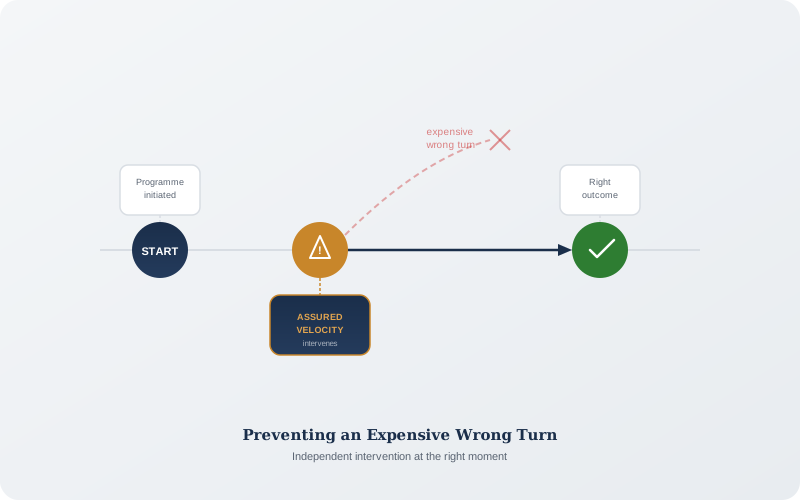
A structured walkthrough of an engagement where early independent intervention prevented a £1.5m technology misstep. The root cause of the problem cost £15k to fix. The recommended solution would have cost £1.8m.
A lean management system introduced over three months identified 30% capacity release and significantly uplifted operational management capability.
A standardised “apply once” onboarding journey reduced colleague toil by 50%, lead time by 40%, and eliminated a key risk to the transformation programme.
A rapid four-week assessment and process redesign delivered a 70% reduction in time from performance review to pay change - without any technology spend.
A Tier 1 investment bank in breach of PRA scenario reporting requirements achieved 50% lead time reduction and full compliance within six months - at a net cost saving.
Fractional CTO engagement delivered PRA compliance, £50M capital release, and £14M annual Opex savings for a regulated financial services firm under regulatory scrutiny.
A fractional CTO led a VMware-to-Azure migration and embedded Secure-by-Design controls - delivering £500k annual savings and protecting key defence contracts.
Senior technical leadership stabilised a high-risk estate, restored delivery control, and contributed to a £4M annual Opex reduction on a major national infrastructure programme.
Technical leadership owned the full design and delivery of a new core banking platform - signed off by the FCA on schedule with zero timeline slippage.
Senior technical leadership surfaced risk transparently and embedded governance and accountability structures that would survive beyond the engagement.
Technical leadership delivered national datacentre rehosting at scale, stabilising a high-risk estate and strengthening the technology foundation for a nationally critical operation.
A 12-week diagnostic across 80 offices identified £26M+ in annual Opex reduction across bad debt, Lead to Cash, P2P, and Record to Report processes - ahead of a PE transaction.
Full redesign of the client onboarding journey reduced onboarding time by 65%, implemented straight-through processing, and removed 100% of non-compliant customers at source.
Interim leadership stabilised a business affected by attrition and leadership absence - delivering 50% uplift in sales capacity, £3M revenue protected, and a 75% improvement in complaints resolution.
The 8-Pillar Transformation Map - why coordinating across functions matters more than fixing any single one.
Your board is making decisions on data nobody has verified. What to do about it.
Your board is being asked to invest in AI by people who have never run an operation. Here is what to ask first.
Growth does not break businesses. Outgrowing the structure that enabled the growth does.
Talent exits are a lagging indicator. The structural problem has been present for 12 to 18 months before they hand in notice.
Most post-acquisition integrations are declared complete at the point the deal closes. The actual work has barely started.
No resources match your search.
Three types of content: articles (in-depth guides on transformation, technology, leadership, and operating model topics), case studies (anonymised accounts of work we have delivered with specific outcomes), and tools (diagnostic checklists and templates that mid-market leaders can use directly).
Yes. Every case study describes an actual engagement delivered by an Assured Velocity partner or by partners during prior senior roles. Client names are anonymised to protect commercial confidentiality, but the situation, intervention, and outcomes are factual and verifiable through reference calls on request.
The articles are written by Assured Velocity partners drawing on direct delivery experience. The named author at the end of each article is accountable for its content. Each article carries an author bio with the partner's background and LinkedIn profile.
Yes. Everything on this page is freely shareable - link to it, reference it, send it to colleagues. The tools are designed to be used directly within your organisation. If you cite or excerpt material in a published piece, attribution to Assured Velocity is appreciated but not required.
New articles are published regularly, typically every one to two weeks. Case studies are added as engagements complete and anonymisation is agreed with the client. Existing articles are reviewed and updated when the underlying landscape changes - regulatory shifts, technology shifts, or material new data.
Email the partners directly or book a scoping call via the website. We regularly write articles in response to questions that come up across multiple client conversations - if you are wondering about it, others probably are too.
Yes. The Velocity Brief is a periodic note from the partners covering recent thinking, new articles, and observations from current engagements. Sign up via the Join Our Network page. We do not send marketing email outside of that.